

As mandatory BNG reaches nationally significant infrastructure projects, we're publishing our most detailed pricing report yet, and making regional off-site unit prices free to view at bngpricingreport.com.
From today, 2 November 2026, biodiversity net gain is mandatory for new nationally significant infrastructure project (NSIP) applications in England. Any development consent order application submitted from today must deliver at least a 10% gain in biodiversity.
These are large projects: roads, energy schemes and rail lines will need more off-site units than a typical housing development, often across several habitat types and locations. That makes it more important than ever that buyers can see what is available, where it is, and what it costs.
So today we are publishing our November 2026 BNG Pricing Report, alongside a new free geographic pricing platform: bngpricingreport.com.
What's new
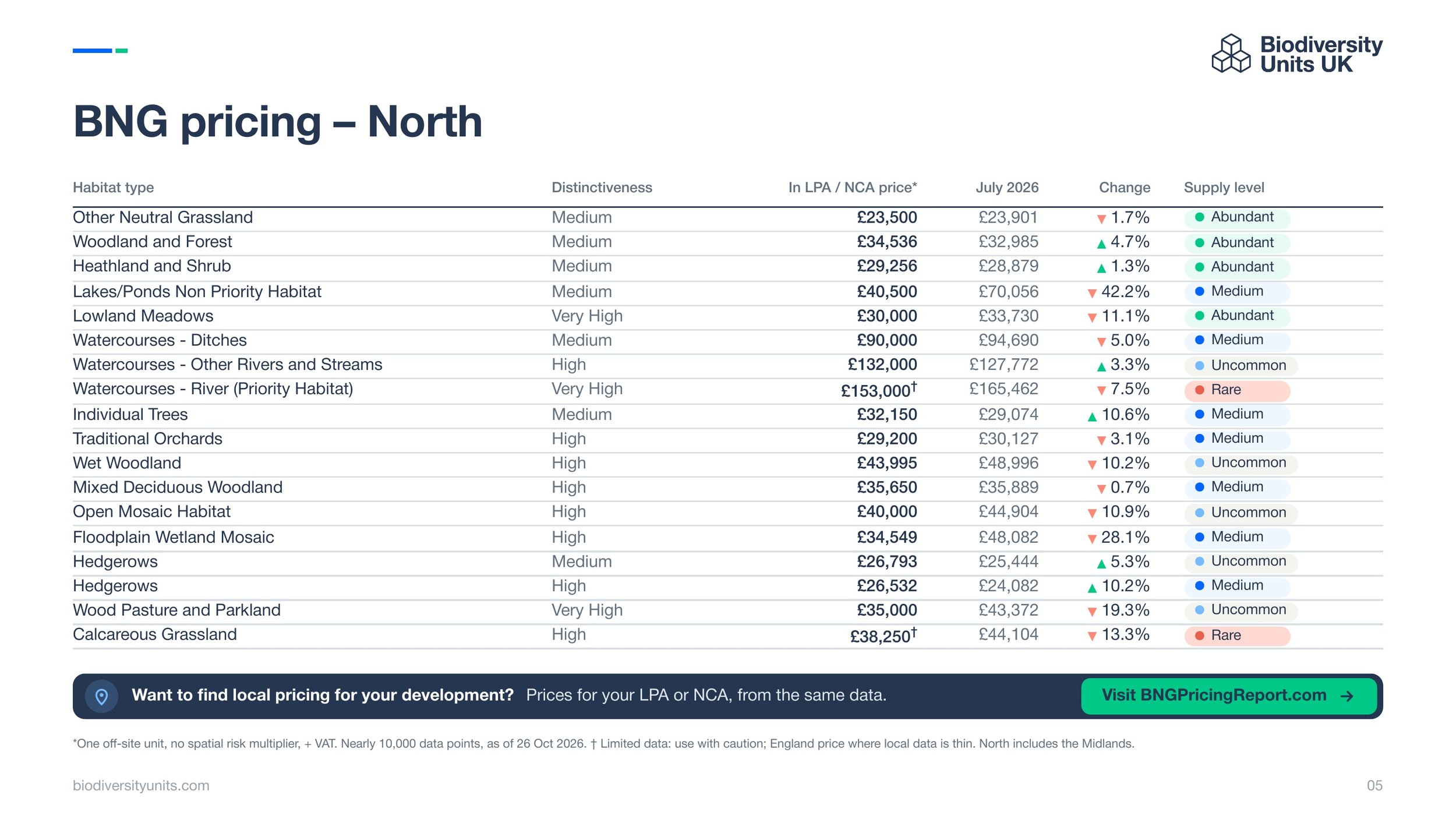
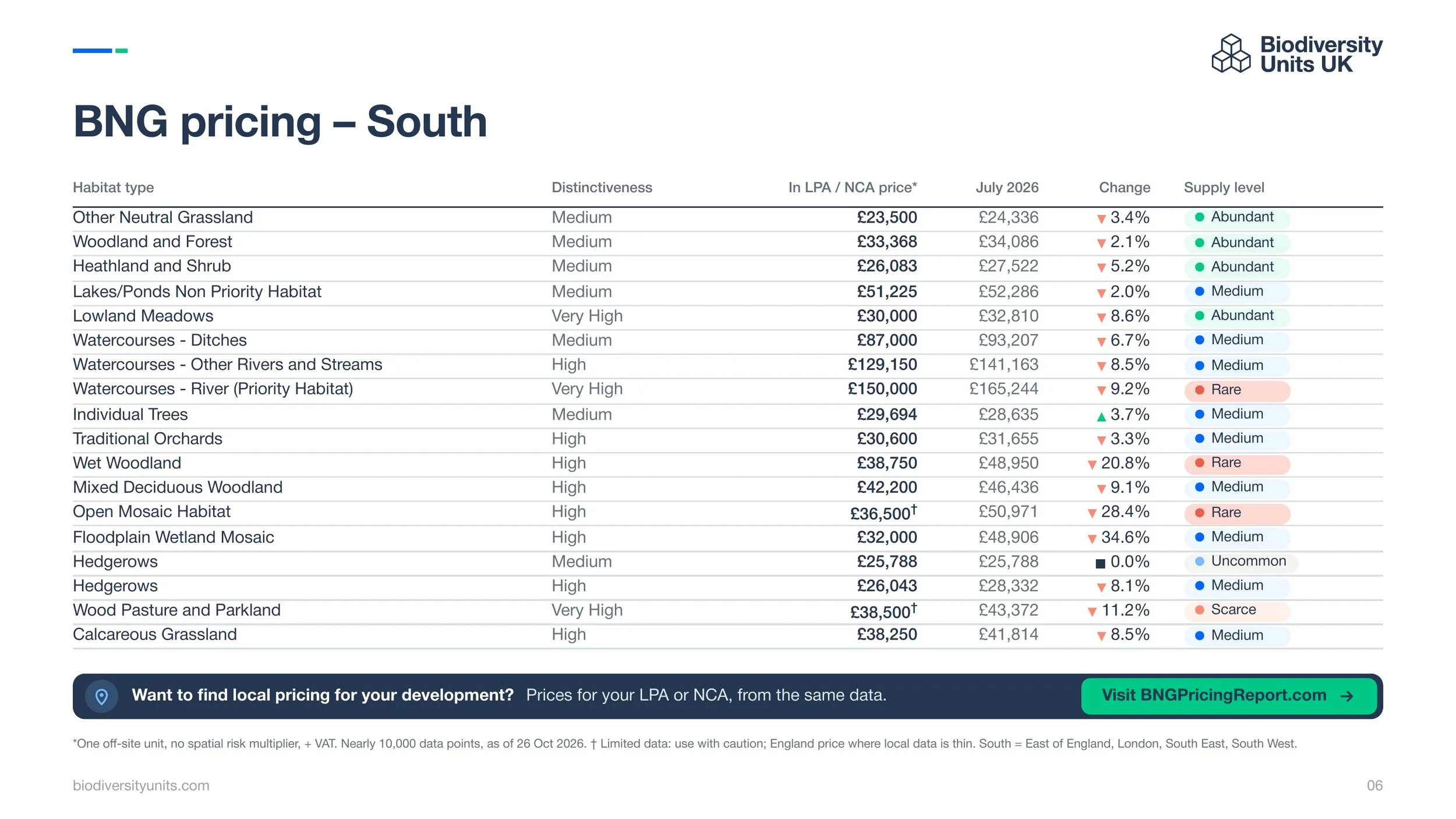
The full report is our most detailed yet, built on data from 305 habitat banks, up from 254 in our July report. It draws on nearly 10,000 BNG data points and shows off-site unit prices for the North and South of England, with all nine regions in the appendix.
bngpricingreport.com makes regional off-site unit prices freely available so you developers, planners, ecologists and landowners can check typical prices in their region in a few clicks. It’s part of our commitment to a transparent BNG market, especially as larger projects needing more units come forward.
More land committed to nature
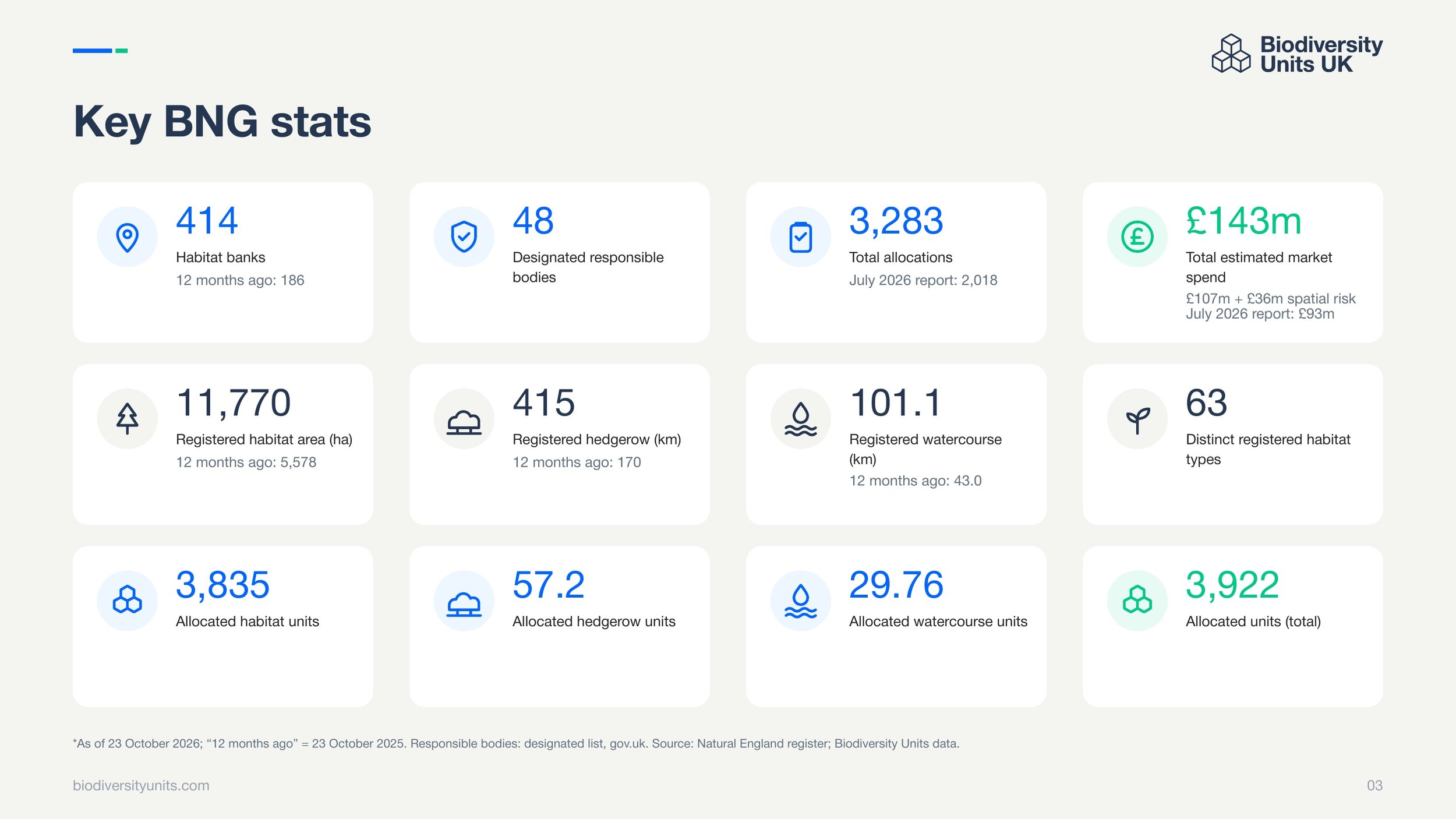
The register now holds 414 habitat banks, up from 186 a year ago.
That is an increase of 123% in twelve months.
The land behind those banks has grown at a similar rate. Registered habitat area has more than doubled, from 5,578 to 11,770 hectares. Registered hedgerow has risen from 170 km to 415 km, and registered watercourse from 43 km to 101 km.
That is the point of BNG: more land in England being actively managed for nature.
A widely distributed market
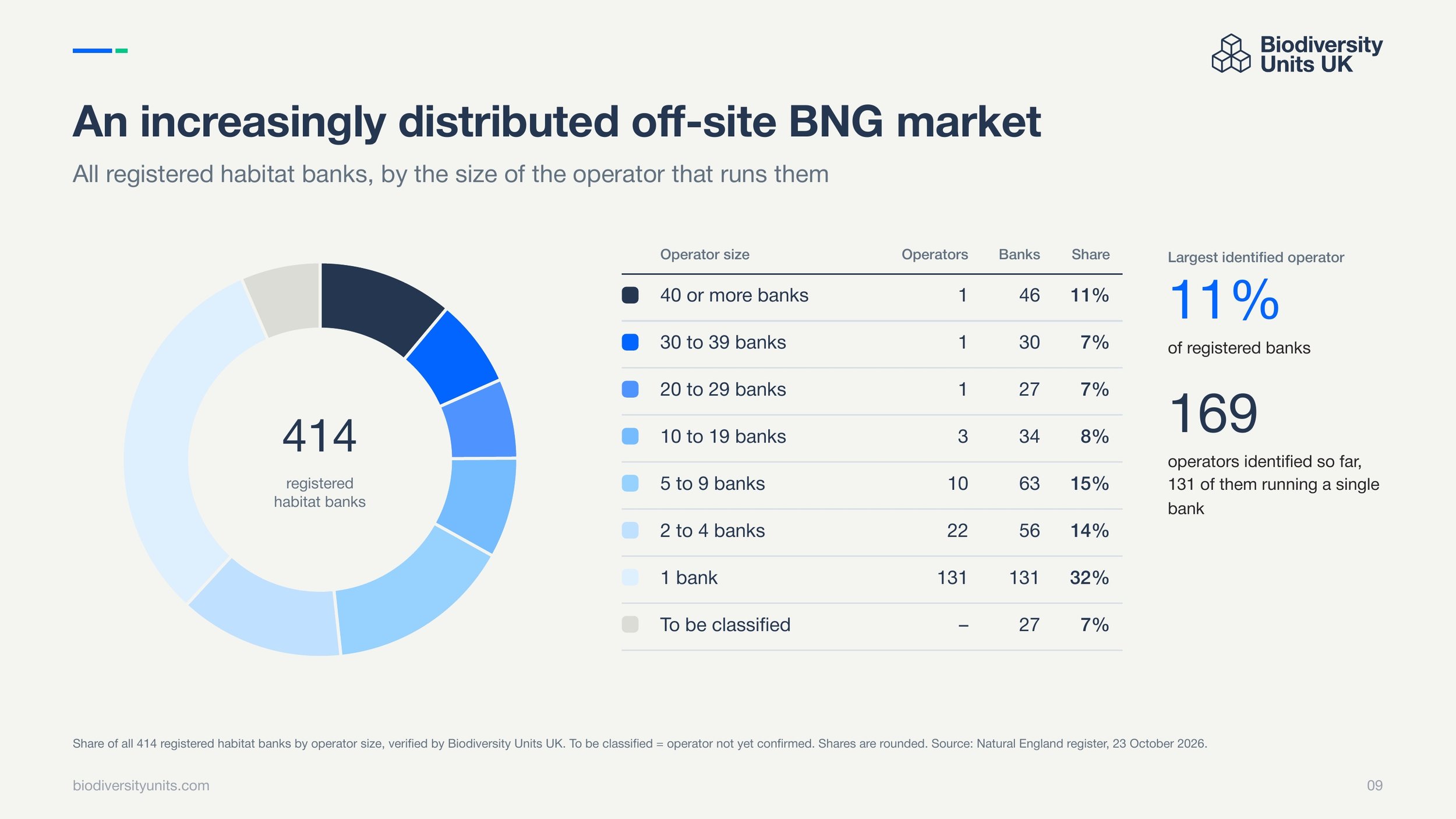
That supply is spread across a large number of operators. We have identified 169 so far, and 131 of them run a single habitat bank. The largest operator accounts for just 11% of registered banks.
For buyers, that means more choice, but also more suppliers to find, compare and check. The right units for a project may sit with an operator you have never heard of.
Coverage is also uneven. 41 of England's 159 National Character Areas, and 151 of its 308 Local Planning Authority areas, still have no registered habitat bank. In almost half of planning authorities, buyers have to look beyond their own boundary.
This is where we can help. We work with habitat bank operators across England, from large portfolios to single-site landowners. If you need units, including less common habitat types or units in a particular area, just get in touch with our team and we’ll find you up to four supply options, at no cost. With our matched pricing offer you pay the same as going to the supplier.
A market building scale
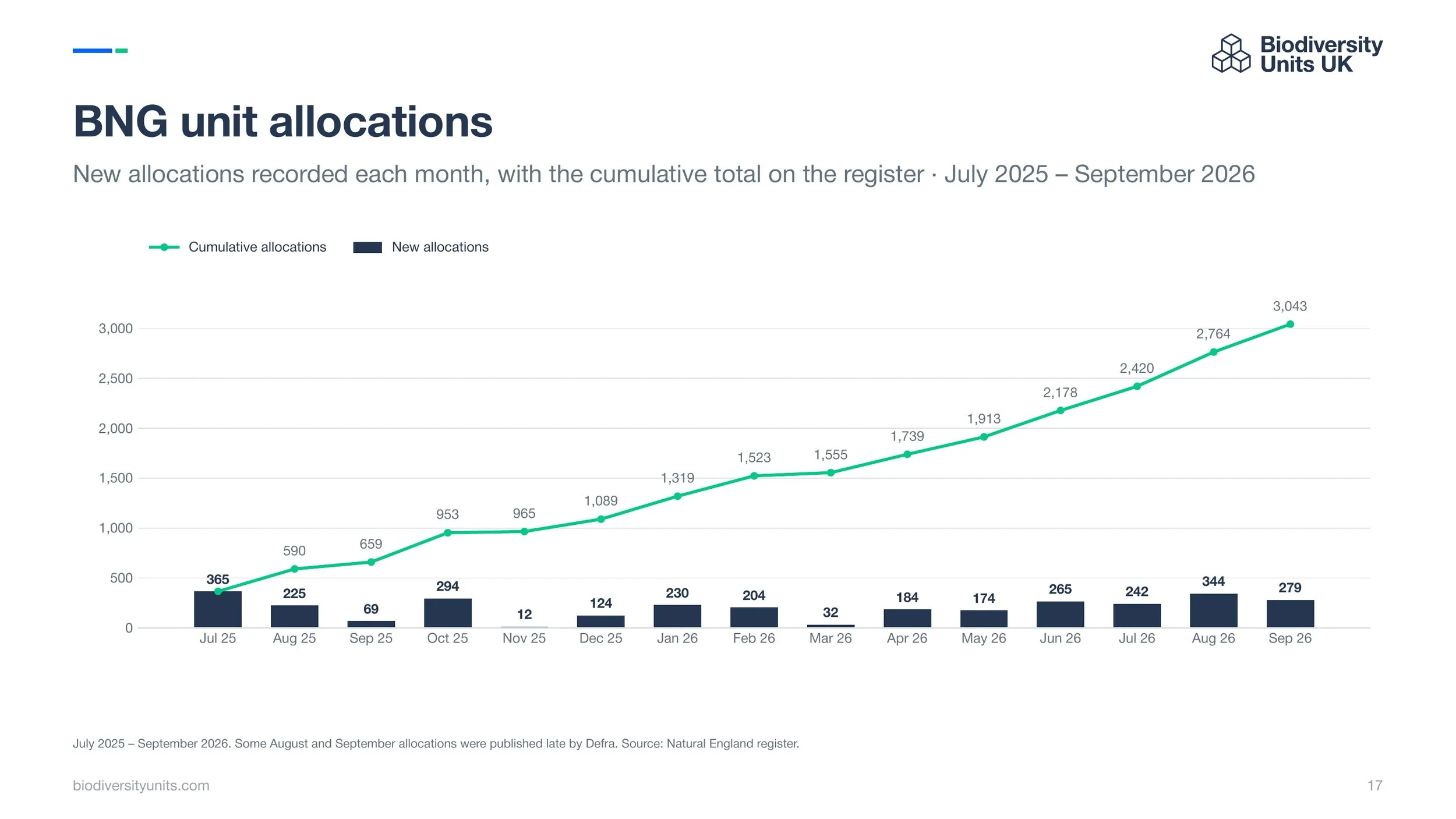
Allocations rose 39% in Q3 to 865, with an estimated value of £32.8m. Since our July report, the total estimated value of registered allocations has grown from around £93m to £143m.
That is money developers have committed to creating and managing habitat over the long term. Much of it goes to farmers and landowners who deliver that habitat on the ground. It also shows a market building the capacity it will need as infrastructure demand arrives.
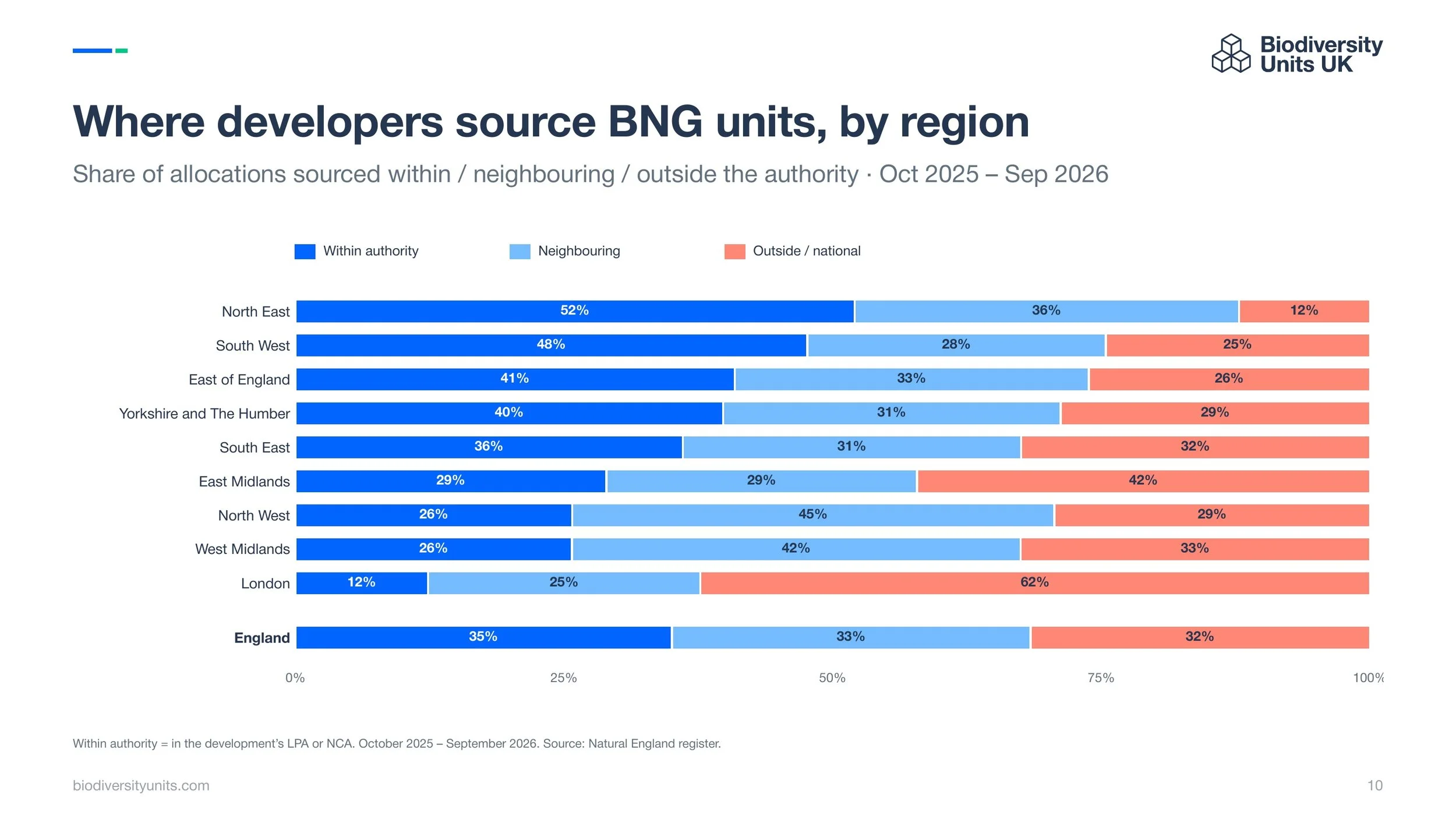
Where units come from still matters. In Q3, 35% of allocations were sourced within the development's own planning authority or character area, 34% from neighbouring areas and 31% from further afield. That mix has barely changed, even as supply has grown.
Under the statutory metric, units bought further from a development count for less, so buyers need more of them. We estimate around £36m of total spend to date reflects this spatial risk. Better visibility of local supply can help buyers keep that cost down.
What happens next
NSIPs will not bring an overnight surge in purchases. Today marks the start of a new pipeline. But these projects could bring larger, more concentrated requirements into a market whose supply is spread across many smaller operators.
A single habitat bank may be able to meet part of a requirement but not all of it. Buyers will need to work across several banks, habitat types and locations, and are likely to expect stronger due diligence than registration alone.
We will keep publishing this data so everyone can see how the market is changing.
Explore the data
See regional off-site unit prices for free at bngpricingreport.com
Download the full October 2026 BNG Pricing Report here: www.biodiversityunits.com/bngpricingreport
Need units for a project? Get up to 4 different supply options at no cost: www.biodiversityunits.com/getaquote
Got questions?
We know that this data can create more questions than answers which is why we host a monthly Lunch & Learn webinar. In it we share “how to buy BNG units at the right price”.
If you want to ask the authors of the report some direct questions, we'd love to chat. Plus every attendee receives a CPD certificate.
Our next free event is on the 18th November at 1pm: signup here