

Nationally Significant Infrastructure Projects can require complex BNG solutions, covering multiple habitat banks and varied requirements. Our team works with you to create the best solution from our national network, finding you the most local units for a smooth planning process. All bought on your behalf.
Join over 300 leading property developers who have trusted us













You could Google around and contact different suppliers: it’s easy enough, but time-consuming.
Maybe call a national network: one point of contact, but limited to their supply and prices.
There are online marketplaces: but who are you going to talk to if there’s an issue?
Major infrastructure projects have plenty of moving parts. Finding suitable off-site biodiversity units shouldn’t mean adding a long list of suppliers to chase.
Biodiversity Units UK connects your project team with a broad network of habitat banks across England. We explore your requirements, source suitable options and help you understand the commercial choices.
Hassle free BNG solutions
“They were easy to work with, efficient in providing an off-site biodiversity units agreement, and very informative throughout the process, clearly explaining how everything worked.”
Pavanjit Nijjer, Director,
Nijjer Estates LTD
“We find that all the team at Biodiversity Units UK are incredibly knowledgeable, approachable, and commercially aware of the challenges which developer’s can often face.”
Gary Little, LNT Care Developments
“They have given us the confidence to make decisions on BNG strategies in terms of on or offsite provision and to challenge Local Authorities when required.”
Jo Kemp, Senior Development Planner, LNT Developments

The best market price at no extra cost
Matched pricing with suppliers, so we take a referral fee and not a markup. Access to 220+ suppliers across 85+ of the market and 337 LPAs.

One metric submitted, and a dedicated team member curates up to four supplier options within a few hours, with a full-time team and bespoke technology behind them.
Speed, with no extra legwork for you

Our optional BNG Certainty service means the paperwork, negotiations, and comms are handled throughout the planning process. From BGP to LPA negotiation, and contract reviews, an end-to-end service.
Enjoy some planning peace of mind
Our network covers more than 85% of current BNG unit suppliers
Wherever you’re building, we’ve already done the legwork - mapping habitat banks, understanding Local Planning Authority preferences, and keeping on top of new supply as it comes online.
220+ suppliers
All 337 LPAs
So instead of ringing round piecing together a solution, just get in touch. We find you a range of available options and with Matched Pricing, you don't pay any more.
Since 2024 we have been publishing a Quarterly BNG Pricing & Insights Report. This means we are uniquely placed to successfully handle the commercial side of your Biodiversity Net Gain solution.
One contact, Matched Pricing and planning certainty
Working with us is simple:
Send us your metric
Get a range of supply options, fast
Then choose an optional service to finalise the planning process with peace of mind
Our whole-of-market sourcing service comes at no cost to you because we offer Matched Pricing with our suppliers. They give us an introductory fee once the transaction completes.
If you need support beyond the introduction, we’ll agree what is included before you proceed. For an NSIP, that scope should reflect your project’s consenting route and the responsibilities of your existing advisers.
Get your BNG supply options today.
01
Share your requirements
Tell us what BNG units your project needs using our form or calculator.
ONE SIMPLE BRIEF
02
We find your best options
At no cost we search 220+ suppliers (over 85% of the market) to negotiate up to 4 options for you.
FREE SOURCING SERVICE
03
We handle the transaction
Choose BNG Certainty and we manage everything through to planning compliance.
OPTIONAL PAID SERVICE

Jen is our Operations Director and leads our transactions team

Will is our Commercial Director and leads our team of brokers
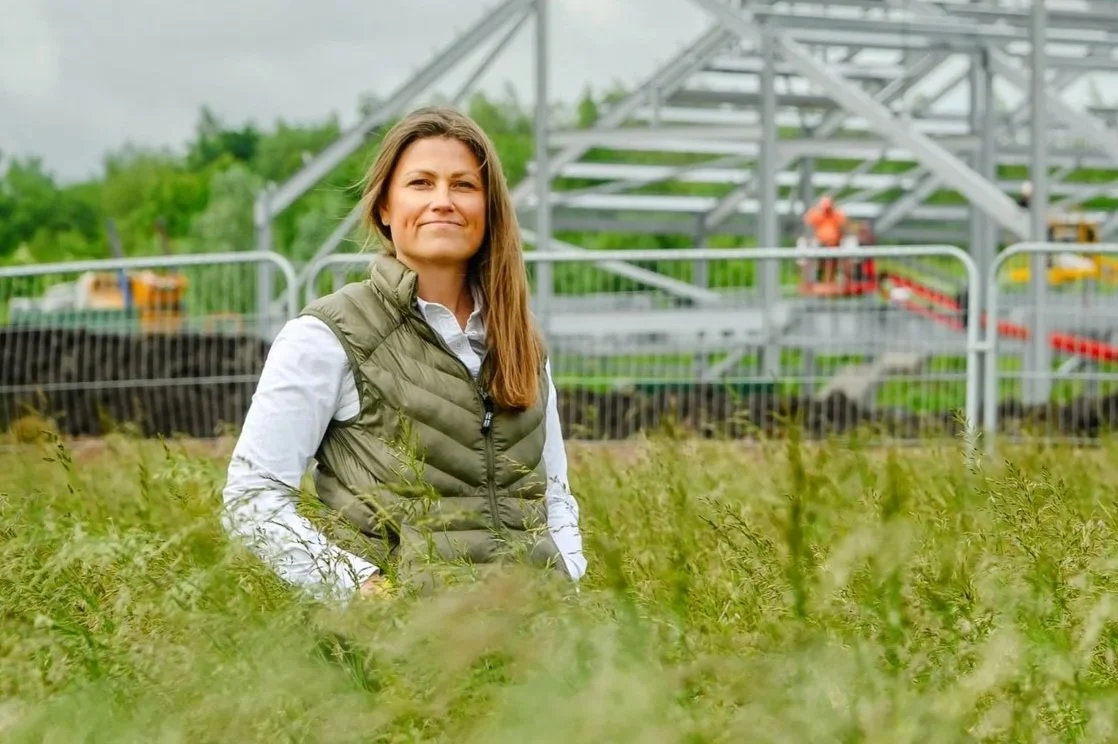
Liz is our Partnerships Director building long term relationships

Bindi is our Lead Habitat Specialist and checks your metric
Need a quick BNG cost estimate or support with the whole buying process? Compare our services to find the right option for your development project.
Our Product
BNG Core
No cost
With free, you get:
✓ Matched pricing with Habitat Banks
✓ Range of supplier options
✓ Direct introduction to supplier
We take a commission from suppliers to enable matched pricing.
BNG Certainty
+5% {subject to negotiation}
With a 5% additional fee, you get:
✓ Matched pricing with Habitat Banks
✓ Further negotiation of commercial terms on your behalf
✓ Plan compliant documentation for LPA
✓ Biodiversity game plan (BGP) creation
✓ BNG condition discharge support
✓ Liaison with ecologist, planner, and architect
✓ LPA negotiations and compliance queries
✓ Habitat bank legal contract review and completion management
✓ End-to-end process oversight - nothing gets missed
✓ Experienced support if complications arise
✓ Independent advisory on Habitat bank legal contracts

The BNG Pricing Report
Published since 2024 our quarterly Pricing Report is the only transparent source of off-site unit pricing in the UK.
The BNG Price Calculator
Instantly understand your off-site BNG unit costs
Make faster, better-informed BNG decisions. Powered by England’s biggest pricing dataset. Free to use.

Real pricing data
85% of the available market
220+ Habitat Banks
Any development in England


FAQs for NSIP Developers
Mandatory BNG applies to qualifying Development Consent Order (DCO) applications submitted on or after Nov 2, 2026. The minimum requirement is 10% biodiversity net gain. Government NSIP guidance.
When does mandatory BNG apply to NSIPs?
1
Which BNG rules should I consult for an infrastructure project?
2
Start with the biodiversity gain statement relevant to your project’s sector, alongside the applicable National Policy Statement and government guidance. Gain statements set out how projects must calculate, deliver and evidence BNG. A separate statement covers development where no National Policy Statement has effect. Biodiversity gain statements.
The Spatial Risk Multiplier reduces the value of off-site gains that are farther from the project’s impact site. For area habitats and hedgerows, gains within the same Local Planning Authority or National Character Area score 1.0, neighbouring areas score 0.75, and gains further away score 0.5. Watercourses use catchment boundaries. This means location can materially change how many off-site units a large project needs to secure. Government NSIP BNG guidance.
What is the Spatial Risk Multiplier for an NSIP?
3
How should an NSIP team budget for off-site BNG units?
4
Start with current market benchmarks, but do not rely on one average price per unit. Habitat type, distinctiveness, geography, scarcity and volume can all change the price. Use the BNG Pricing Report for market context, then test the live supplier market against the project’s likely habitat requirements and phasing. For very large or scarce packages, early market testing is especially important.
How long can an NSIP off-site unit transaction take?
5
Once a suitable package is agreed, the commercial transaction itself can move quickly. The wider programme is usually longer because large projects may involve procurement, due diligence, phasing, legal agreements and changes to the DCO design. Formal allocation also requires the relevant decision letter and Natural England can take up to six weeks to determine an allocation application. Build the unit strategy into the consent and procurement programme early.
Does mandatory BNG cover offshore and cross-border infrastructure?
6
The framework covers the components in England, including the intertidal zone down to the mean low-water mark. It does not cover the marine environment beyond that boundary. Gains counted towards England’s mandatory requirement must be delivered in England. NSIP scope guidance.
How is an NSIP’s biodiversity unit requirement calculated?
7
The project’s ecologists use the statutory biodiversity metric to assess the baseline, habitat losses and proposed gains. The resulting shortfall identifies the off-site units required. Habitat type, trading rules, location and delivery timing all influence the final purchase requirement. Statutory metric guidance.
8
Does the BNG assessment cover everything within the DCO order limits?
Not necessarily. The baseline includes habitats negatively affected and habitats used to deliver BNG. Unimpacted habitats can be excluded where justified. The BNG boundary therefore needs careful definition and may differ from the order limits. Check the relevant sector statement. Gain statement collection.
Can an NSIP use off-site units without first exhausting on-site delivery?
9
Yes. NSIPs can consider on-site and off-site delivery together. This flexibility does not remove the need to avoid and minimise ecological harm. Statutory biodiversity credits remain a last resort. NSIP delivery guidance.
When should an NSIP team start researching unit availability?
10
Begin once likely habitat shortfalls emerge. Large projects may need substantial quantities or uncommon habitat types. Early enquiries help suppliers assess future demand and allow the project team to compare availability, costs and procurement options. Biodiversity Units UK can support an early market enquiry based on the project team’s likely requirements.
What information should we provide when requesting unit quotes?
11
Provide the latest metric, project location or route, habitat requirements, indicative quantities and consent programme. Explain design uncertainties, likely phasing and when units may be needed. Distinguish an initial market enquiry from a request to reserve or purchase units. For enquiries to Biodiversity Units UK, identify the procurement lead and the project ecologist so commercial and technical questions reach the appropriate person.
Yes. A procurement strategy can combine suppliers and habitat types. The project ecologist should check the combined solution against the metric, while the procurement team coordinates contracts and allocation evidence. Off-site purchasing guidance.
Can we source units from several habitat banks or landowners?
12
No. However, the outline gain plan should provide credible evidence that the required units can be secured, such as availability evidence or provider arrangements. The procurement strategy should accommodate design changes. NSIP procurement guidance.
Do we need to buy all units before submitting the DCO application?
13
An outline biodiversity gain plan and draft BNG requirements are needed. The outline plan explains the delivery strategy, calculations, uncertainties and proposed arrangements for securing gains. Follow the relevant sector statement for the full evidence requirements. Biodiversity gain statements.
What BNG documents are needed for the DCO application?
14
Record assumptions and assess realistic worst-case habitat impacts. Explain how alternative designs could change habitat requirements and how additional gains would be secured. Revisit the metric and procurement package as the design becomes more certain. Example: energy biodiversity gain statement.
How should we account for route changes or design uncertainty?
15
Can BNG be delivered through a phased approach?
16
Yes. The outline plan must address the whole project, with detailed phase plans where appropriate. The overall gain must still be achieved for the development actually delivered, including where later phases are cancelled. Check the project’s sector statement and DCO requirements. Example: energy gain statement.
17
Must every unit be secured before construction starts?
Secure as many as reasonably possible before commencement. An agreed schedule may permit some outstanding units to be secured later where justified. All remaining gains must be secured before the relevant project or phase starts operating. Follow the approved plans and DCO requirements. NSIP securing requirements.
What should we check before committing to an off-site purchase?
18
Check habitat compatibility, quantities after relevant multipliers, delivery assumptions, legal security, registration status and allocation arrangements. Commercial checks should cover payment, cancellation, changes in demand and responsibility for completing allocation. Metric tools and allocation guidance.
How long must NSIP biodiversity gains be maintained?
19
Created or enhanced on-site habitats contributing to BNG, and off-site gains, must be secured for at least 30 years. Agreements and DCO requirements should identify management, monitoring and reporting responsibilities. Legal agreement guidance.
20
Does achieving BNG replace other environmental assessments or compensation?
No. BNG operates alongside environmental assessment, protected species duties and designated-site requirements. Habitat works required for other purposes may contribute only where the applicable rules allow; avoid assuming all environmental mitigation counts towards BNG. NSIP gain statements.
21
How can Biodiversity Units UK support an NSIP procurement team?
Biodiversity Units UK can help research supplier options against the team’s habitat requirements, location and delivery programme. Agree the scope for reservations, transaction coordination and supporting evidence. The project’s ecologists, planning advisers and legal team remain responsible for their appointed roles; confirm any DCO-specific support before instruction.