

The BNG Pricing Report: July 2026
The July 2026 edition is the most comprehensive we've produced to date - drawing on pricing data from 265 habitat banks, equivalent to 85% of the registered market. For the first time we combine that pricing data with Natural England's allocation data to give a genuinely joined-up picture of what's being bought, where, and for how much.
BNG Unit Prices in England – July 2026
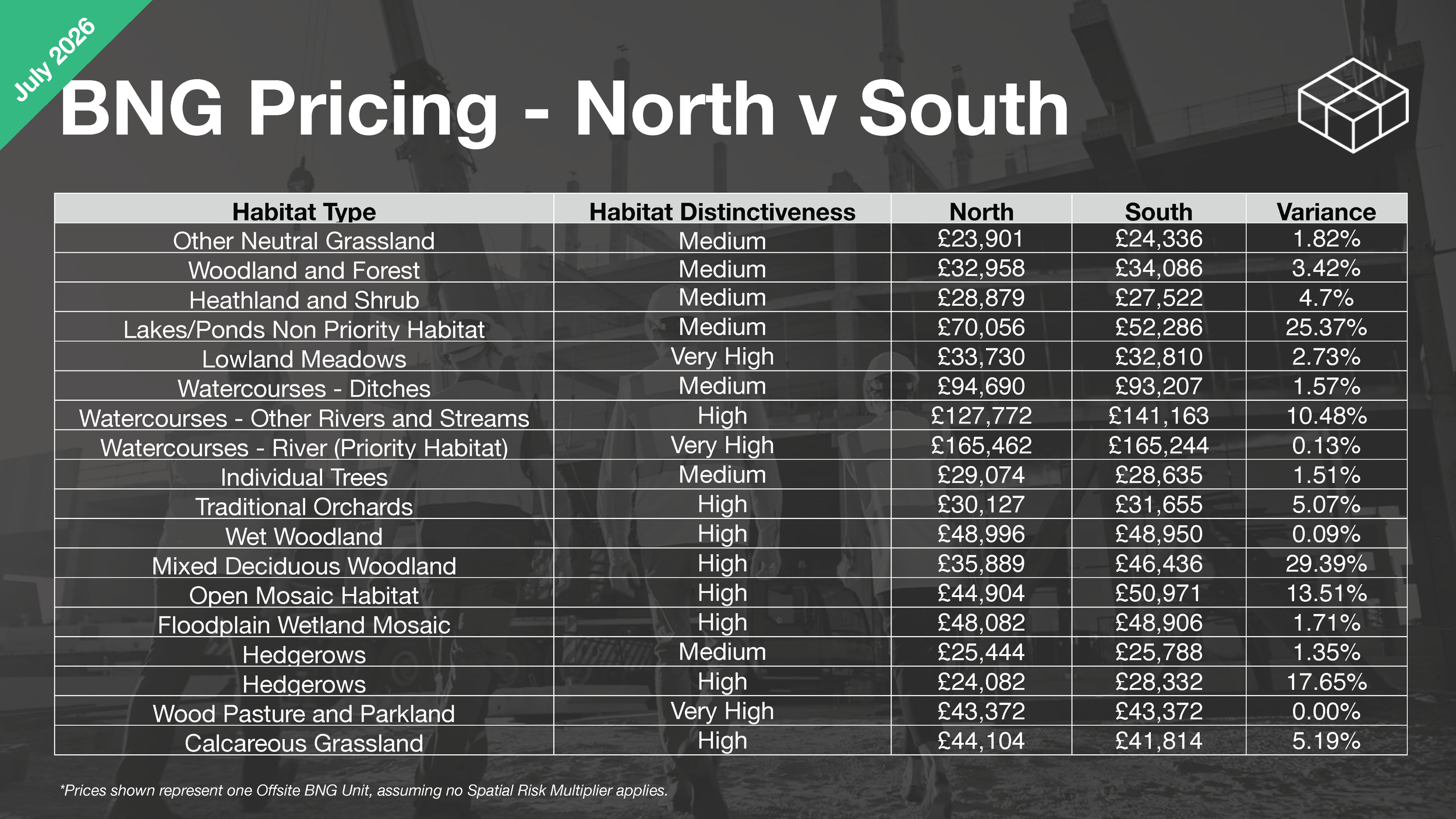
| Habitat Type | Habitat Distinctiveness | In LPA / NCA Price | Supply Level |
|---|---|---|---|
| Other Neutral Grassland | Medium | £23,901 | Abundant |
| Woodland and Forest | Medium | £32,985 | Abundant |
| Heathland and Shrub | Medium | £28,879 | Abundant |
| Lakes/Ponds Non Priority Habitat | Medium | £70,056 | Medium |
| Lowland Meadows | Very High | £33,730 | Abundant |
| Watercourses - Ditches | Medium | £94,690 | Medium |
| Watercourses - Other Rivers and Streams | High | £127,772 | Uncommon |
| Watercourses - River (Priority Habitat) | Very High | £165,462 | Rare |
| Individual Trees | Medium | £29,074 | Medium |
| Traditional Orchards | High | £30,127 | Medium |
| Wet Woodland | High | £48,996 | Uncommon |
| Mixed Deciduous Woodland | High | £35,889 | Medium |
| Open Mosaic Habitat | High | £44,904 | Uncommon |
| Floodplain Wetland Mosaic | High | £48,082 | Medium |
| Hedgerows | Medium | £25,444 | Uncommon |
| Hedgerows | High | £24,082 | Medium |
| Wood Pasture and Parkland | Very High | £43,372 | Uncommon |
| Calcareous Grassland | High | £44,104 | Rare |
Source: Biodiversity Units UK, July 2026 BNG Pricing Report. Prices shown represent one off-site BNG unit, assuming no Spatial Risk Multiplier applies.
| Habitat Type | Habitat Distinctiveness | In LPA / NCA Price | Supply Level |
|---|---|---|---|
| Other Neutral Grassland | Medium | £24,336 | Abundant |
| Woodland and Forest | Medium | £34,086 | Abundant |
| Heathland and Shrub | Medium | £27,522 | Abundant |
| Lakes/Ponds Non Priority Habitat | Medium | £52,286 | Medium |
| Lowland Meadows | Very High | £32,810 | Abundant |
| Watercourses - Ditches | Medium | £93,207 | Medium |
| Watercourses - Other Rivers and Streams | High | £141,163 | Medium |
| Watercourses - River (Priority Habitat) | Very High | £165,244 | Rare |
| Individual Trees | Medium | £28,635 | Medium |
| Traditional Orchards | High | £31,655 | Medium |
| Wet Woodland | High | £48,950 | Rare |
| Mixed Deciduous Woodland | High | £46,436 | Medium |
| Open Mosaic Habitat | High | £50,971 | Rare |
| Floodplain Wetland Mosaic | High | £48,906 | Medium |
| Hedgerows | Medium | £25,788 | Uncommon |
| Hedgerows | High | £28,332 | Medium |
| Wood Pasture and Parkland | Very High | £43,372 | Scarce |
| Calcareous Grassland | High | £41,814 | Uncommon |
Source: Biodiversity Units UK, July 2026 BNG Pricing Report. Prices shown represent one off-site BNG unit, assuming no Spatial Risk Multiplier applies.
The headline: a £100 million market
When we published our June 2025 report, we estimated the BNG market at around £33 million annually in 2025. Twelve months on, our analysis puts it at approximately £93 million for 2026.
That's nearly three times the size, one year on. Our long-term view remains that the BNG market has the potential to exceed £500 million annually by 2035.
What's new in this report:
Pricing data meets allocation data - for the first time
By combining our proprietary pricing database with Natural England's allocation data, we can now analyse the market not just by price, but by volume, geography, and habitat type - all in one place.
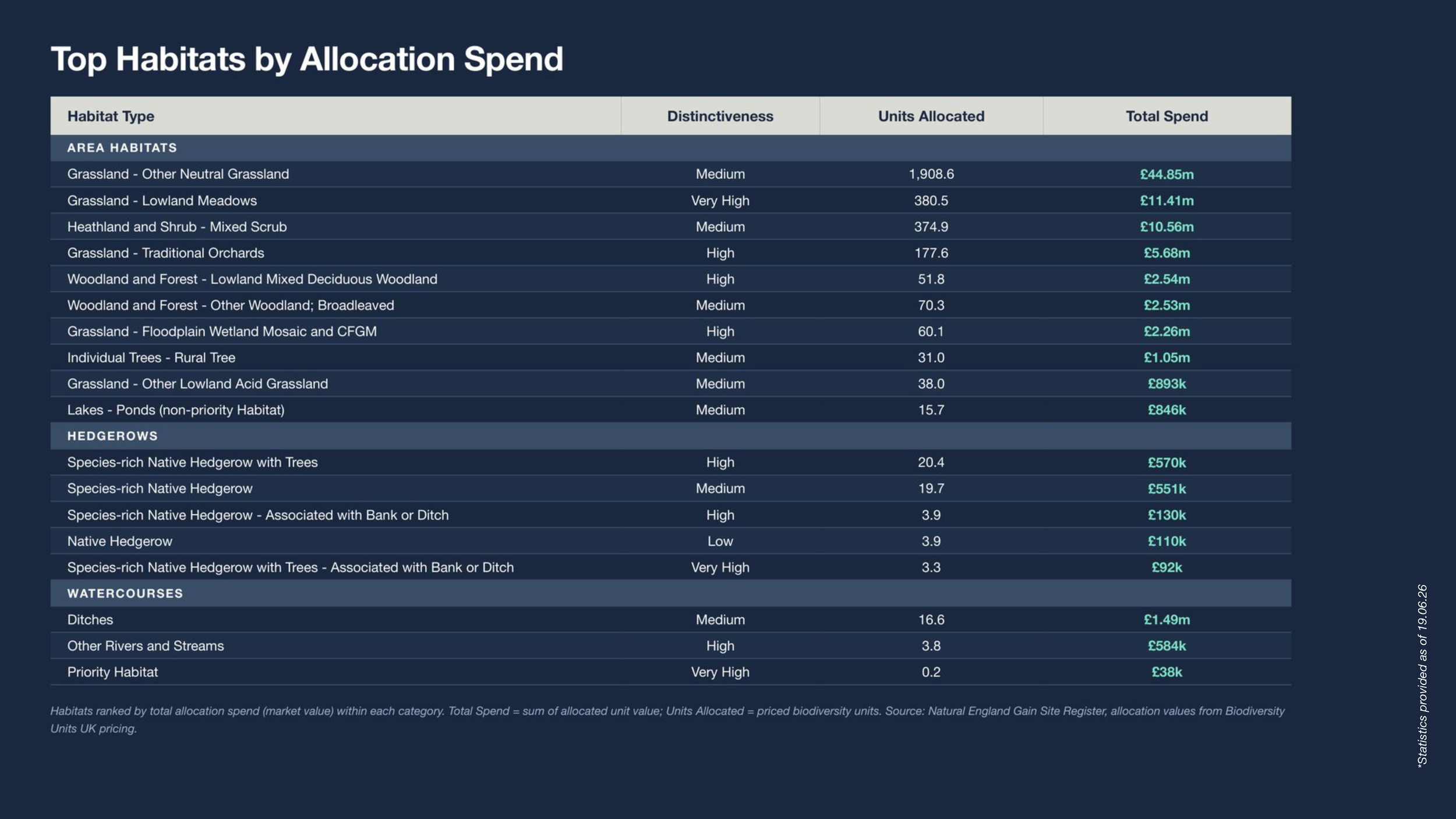
The most purchased habitat types - a league table
For the first time, we can show which habitats are actually being bought, not just priced.
The North is outperforming
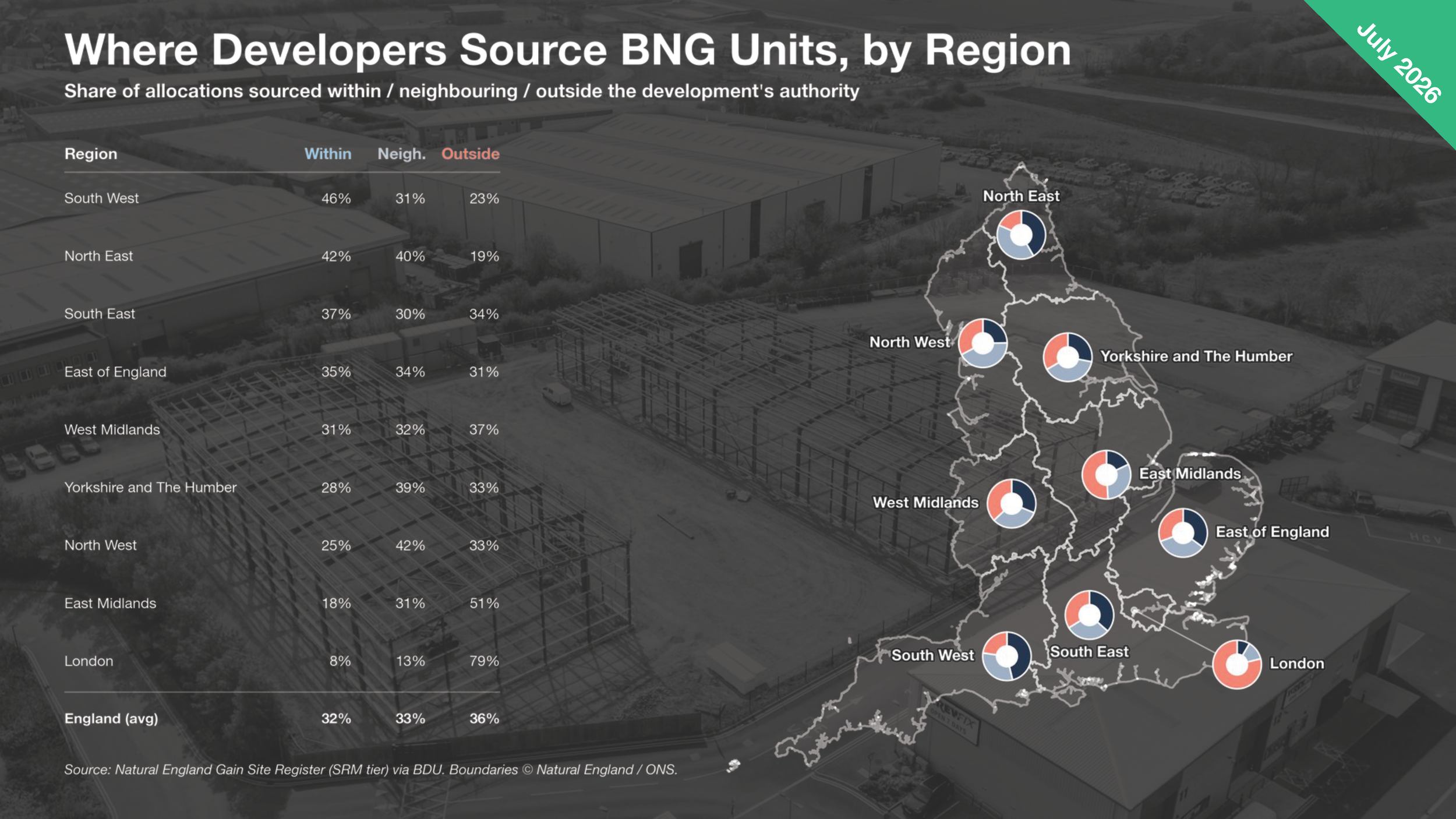
Northern England has fewer habitat banks than the South - 71 versus 149 - yet it accounts for a larger share of market activity by both allocation volume and estimated revenue (£42.5 million versus £38.9 million in the South).
LNRS zones: more competition is coming
In some areas where developers currently have one or two supplier options, they may soon find seven or eight habitat banks able to service the same development.
What this means if you're buying BNG units
The market is bigger, more transparent, and more competitive than it was a year ago. That's positive for developers. But navigating it still requires expertise - knowing where units genuinely exist, which suppliers are commercially reliable, and how to secure the right match for your specific project requirements.
Stay up to date.
Sign up to our mailing list in order to stay up to date with news and developments on how Bio Net Gain is affecting English Commercial Property Development.